Getting into Aalto University's BA in Design and Media is highly competitive. In this second part of our interview, Dhairya Bharvirkar explains how he approached the assignments, built his portfolio, and what he learned from the
SDS BA in Design preparation course.Applying to several schools at once, Dhairya noticed that the same work was read through different lenses depending on where it landed.
"The Aalto process felt more focused on design thinking, observation, and how I approached the assignments themselves. The Dutch schools also cared about my thinking, but they placed more emphasis on the overall portfolio and the range of work I could show. Aalto felt like it was trying to understand how I think as a designer, while the Dutch applications felt broader in terms of portfolio presentation."
Aalto's assignments rewarded interpretation over execution, which meant the hardest decisions came at the very start.
"Aalto's preliminary assignments were interesting but demanding, because they required me to think carefully rather than just produce something visually strong. The most challenging part was deciding how to interpret the task in a way that felt original but still clear."
The course changed the order in which he worked — exploration first, polish later.
"I approached the assignments by first trying to understand what the question was really asking, then exploring several directions before choosing one. The course pushed me to think more openly, test ideas earlier, and document my reasoning. Instead of rushing to a polished answer, I started treating the assignment as a process of discovery."
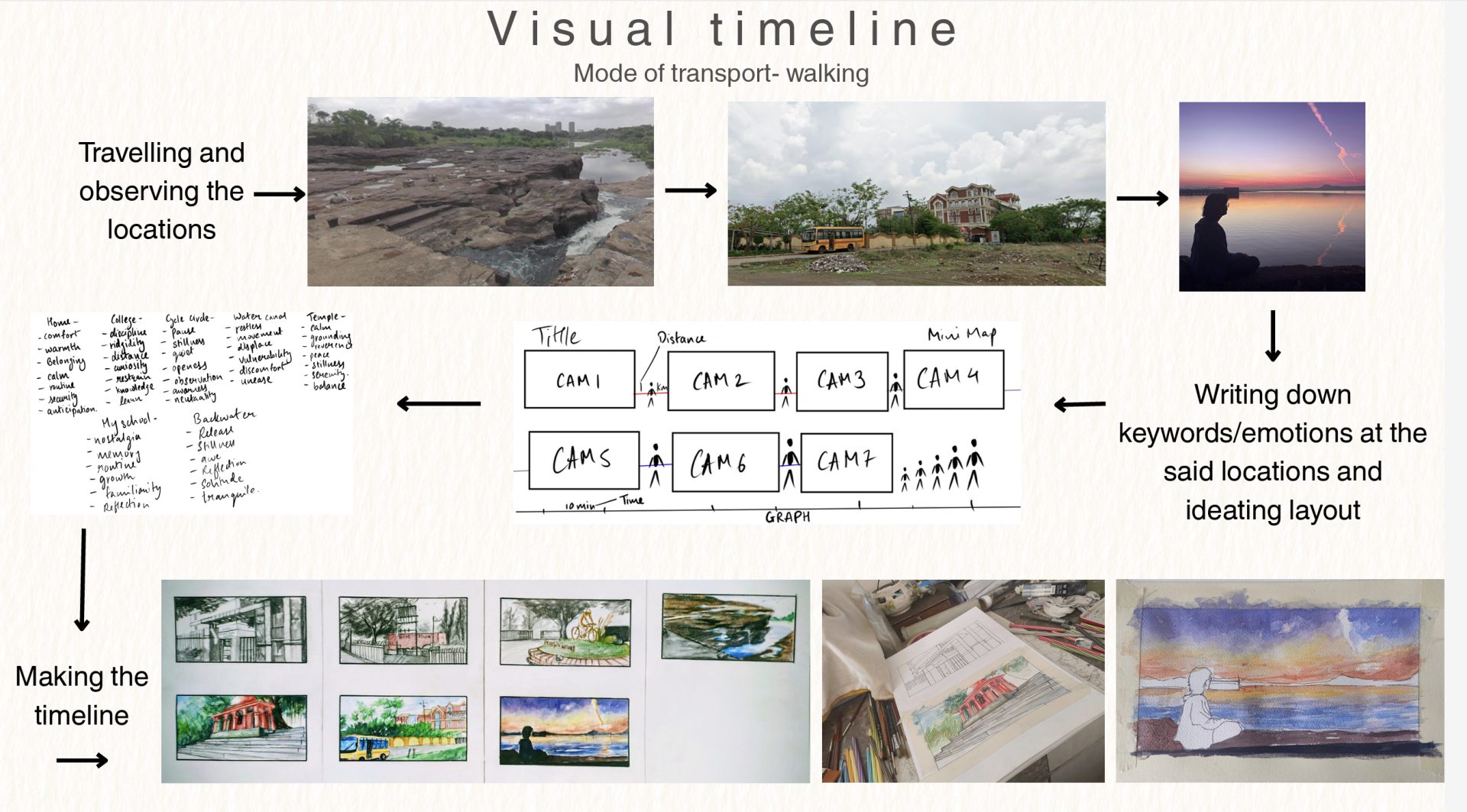
Dhairya's Intake stage application work: Timeline from your typical journey from ponit A to point B. This is how he presented his process working on the task.
Empty space, drag to resize
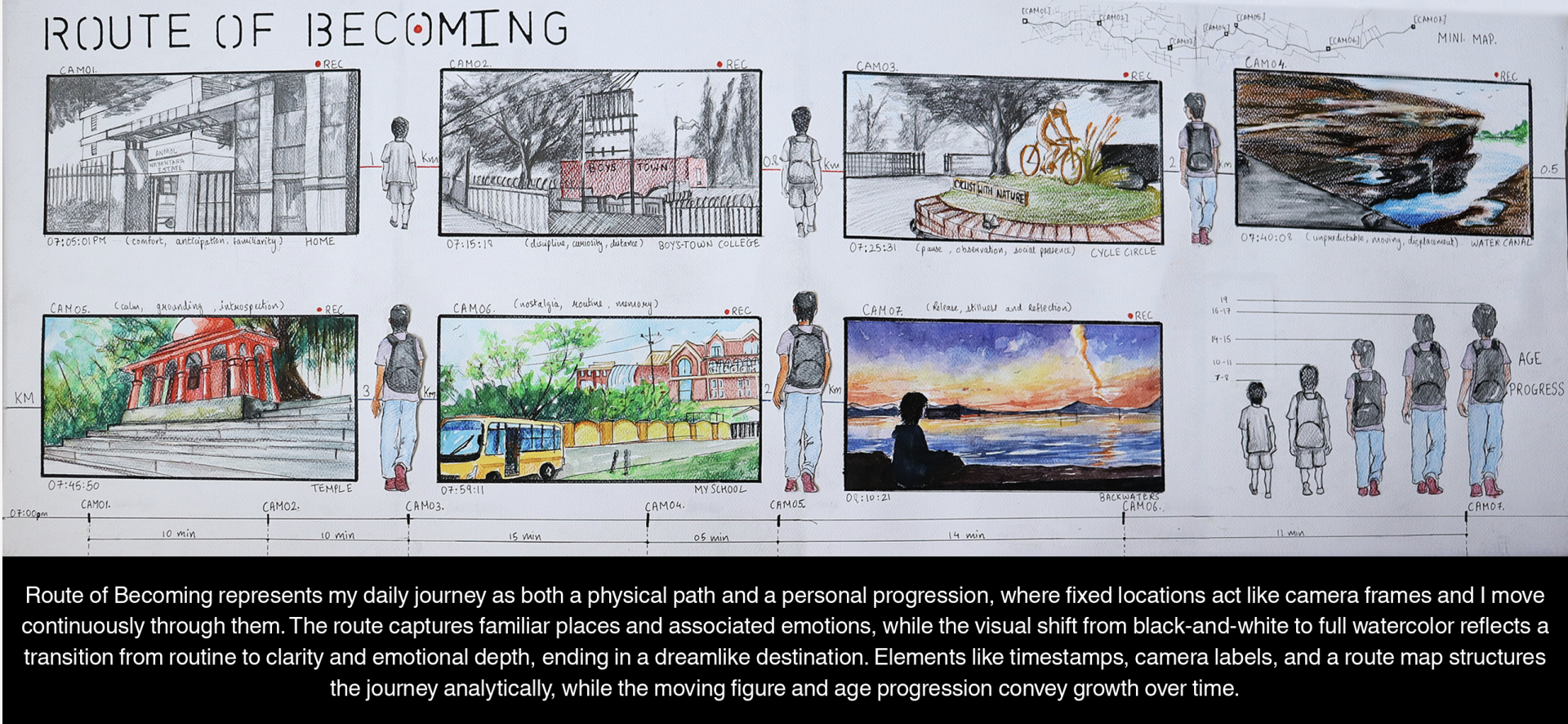
Final timeline. In the series the child grows older while the surroundings gain more color, ashe becomes who he is today.
The clearest example of Dhairya's process is a project that started as something else entirely. An early exploration of bacterial concepts eventually detached from its origin and became a sound visualizer and later one of the strongest pieces in his portfolio.
"The pieces I included were the ones that showed strong thinking, experimentation, and development, like the Lazer Sound Visualizer animation. They demonstrated how I approach design problems, not just what I can produce at the end."
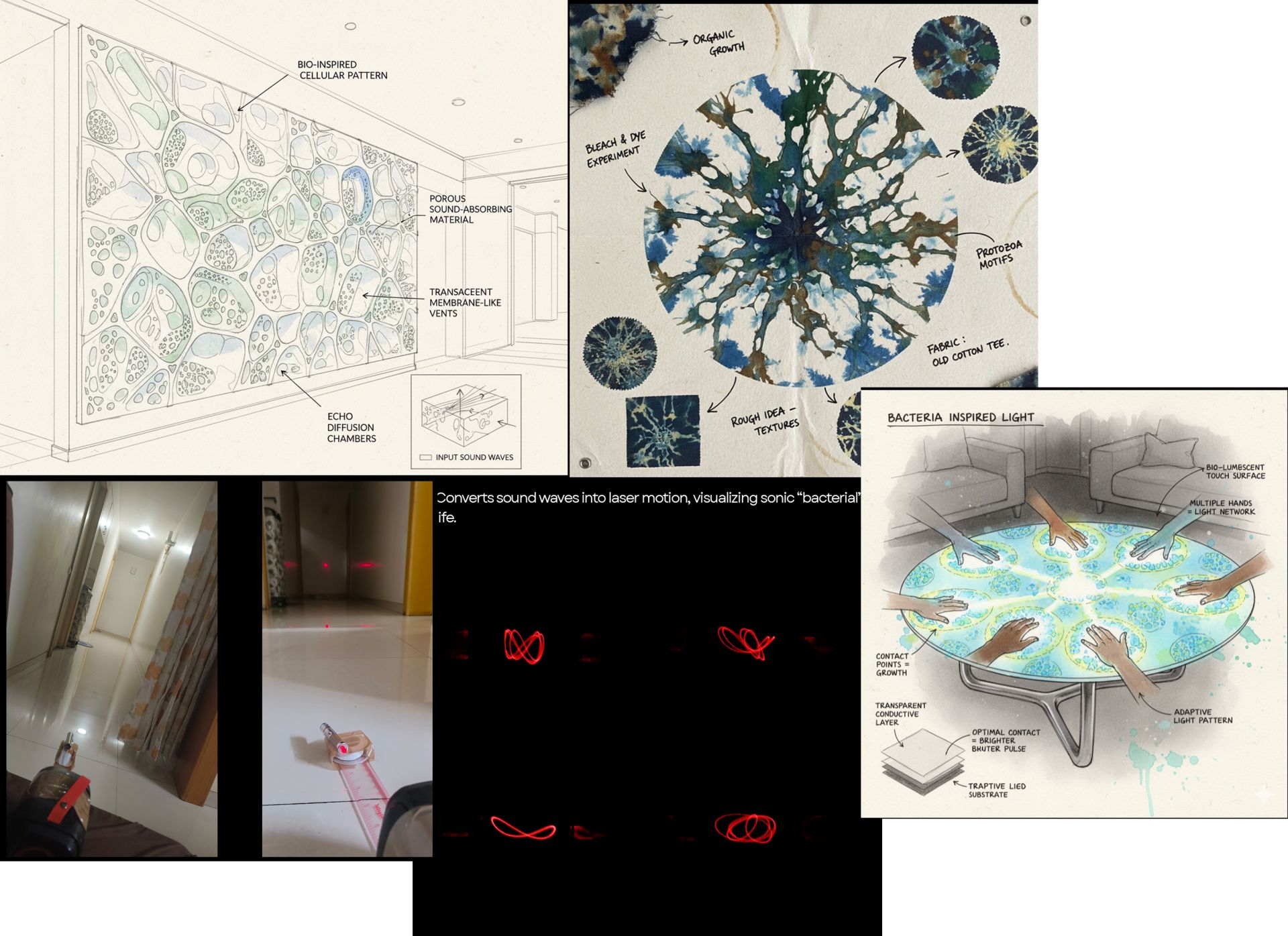
Dhairya's SDS course work: Ideas of how to incorporate bacterial concepts into a design project. Concept development and prototyping/visualising different perspectives around the task helps to evaluate and develop both individual ideas and one's ability to ideate.
Empty space, drag to resize
The same logic shaped how he built and talked about the whole portfolio. The point was never to hide the messy middle of a project, but to make it legible.
"I wanted the portfolio to feel personal, but also organized and easy to follow. A big part of that came from the course assignments, which taught me how to present process, make my thinking visible, and choose work that showed growth rather than just final results."
Feedback was where that clarity got tested, and the interview rewarded the same habit of thinking out loud.
"The most impactful feedback pushed me to make my thinking more visible and deliberate. Tutoring helped refine individual pieces, while group lessons showed me that there are many valid ways to solve the same problem. By the interview, I felt more prepared, because it was less about perfect answers and more about being able to talk about my work clearly."
The point of greatest confidence came once the patterns became visible to him.
"I felt the most clarity after I had gone through the assignments, received feedback, and started seeing patterns in what improved my work. At that point, I stopped feeling like I was randomly trying things and started understanding what kind of presentation felt strongest."
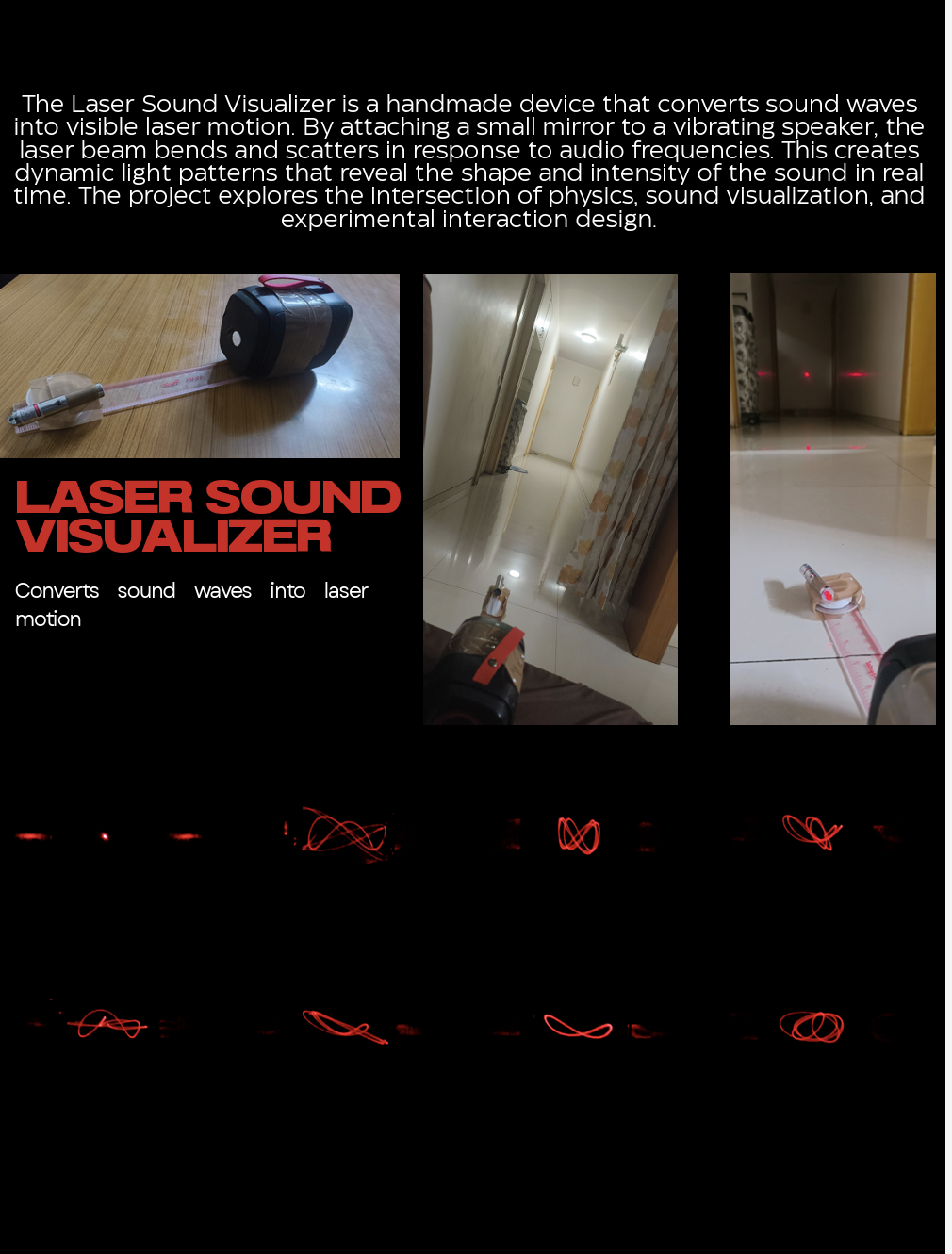
A page from Dhairya's portfolio. The idea from bacteria-assignment grew into an animation and shows how in a creative process an idea from one project can alter into something new when detached from its original context.
Empty space, drag to resize
Reflecting on the experience, Dhairya noticed that different schools valued different aspects of his work.
"Aalto seemed to value reflection, conceptual clarity, and how I arrived at decisions. Dutch schools were more interested in range and independent exploration across projects."
This insight helped him stop trying to predict what admissions committees wanted and instead focus on communicating his thinking clearly and honestly. Looking back, he believes the biggest lesson was not learning how to produce stronger final outcomes, but learning how to make decisions visible throughout the creative process.
"Across the application process, what gradually became more important than producing finished answers was learning how to make decisions visible and structured under uncertainty."
Empty space, drag to resize
Asked what made the biggest difference — the portfolio, the process, or the mindset — Dhairya is clear:
"The biggest difference was the mindset shift. The portfolio improved because my way of thinking improved first. Once I approached the work with more clarity, patience, and confidence, the output became stronger too."
In the autumn, Dhairya will begin his studies at Aalto University. Congratulations, Dhairya!