Let’s start from the beginning. What’s your creative background, and what led you to architecture? Why SDS?
Melana:
Art has been my hobby since I was very little, but as I grew older I realised that I didn’t want my profession to fully depend on creativity alone. I also like math, and it comes to me naturally, so I started looking for a field where those two could meet. Architecture felt like that balance.
Like most students aiming for architecture programs, I started thinking about a portfolio quite early, but I wasn’t confident that my architectural skills were strong enough yet, and I honestly didn’t know where to start. That’s why I decided to take the foundation course first.
SDS was my first choice mainly because the courses are self-paced and include personal feedback. Since my end goal was a finished, strong portfolio, it felt logical to pair the foundation course with the portfolio course they offer.
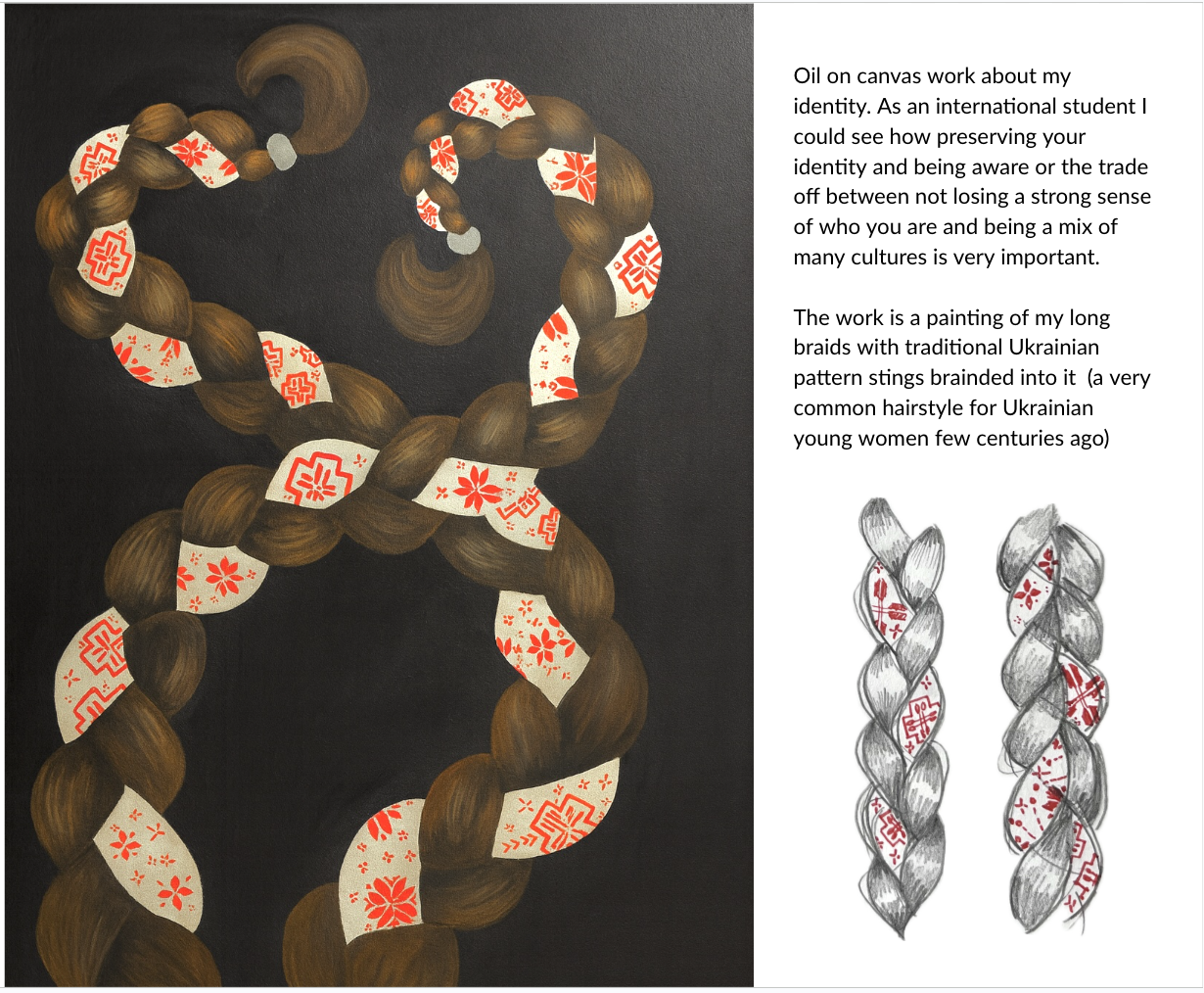
"This is one of my earlier art works I included into the portfolio. Besides projects fro the courses I added sketchers, paintings and other creative works to show my versatility. "
Empty space, drag to resize
You started with the Architecture Foundation Course. What did you learn through the projects? The goal of the course is to open different perspectives on architecture. Did it do that?
Melana:
"Definitely. The course helped me fill gaps in my knowledge while also giving me space to practise both new things and things I already knew.
All ten lessons focus on different aspects of architecture. I did lessons from interior design to urban planning and much more. What I found especially valuable was that I could explore these areas not only through theory but through hands-on projects. That made it much clearer which parts of architecture genuinely inspire me.
By the end of the course, I had a much better understanding of what kind of architect I want to be and which types of projects would best represent that in my portfolio."
Let’s talk honestly about time and workload. You put a lot of time into the projects and revisited them several times. How did that fit into your life?
Melana:
"My goal was to finish my portfolio in just a couple of months, which is actually quite a short timeframe for this kind of process.
On average, I worked on my portfolio several hours a day, around 4 to 5, because I was taking a gap year and didn’t have other studies happening at the same time. That made it manageable for me.
That said, I would strongly advise anyone considering these courses to start well before their goal deadline. You really need time not just to do the work, but to let ideas develop, change, and improve."
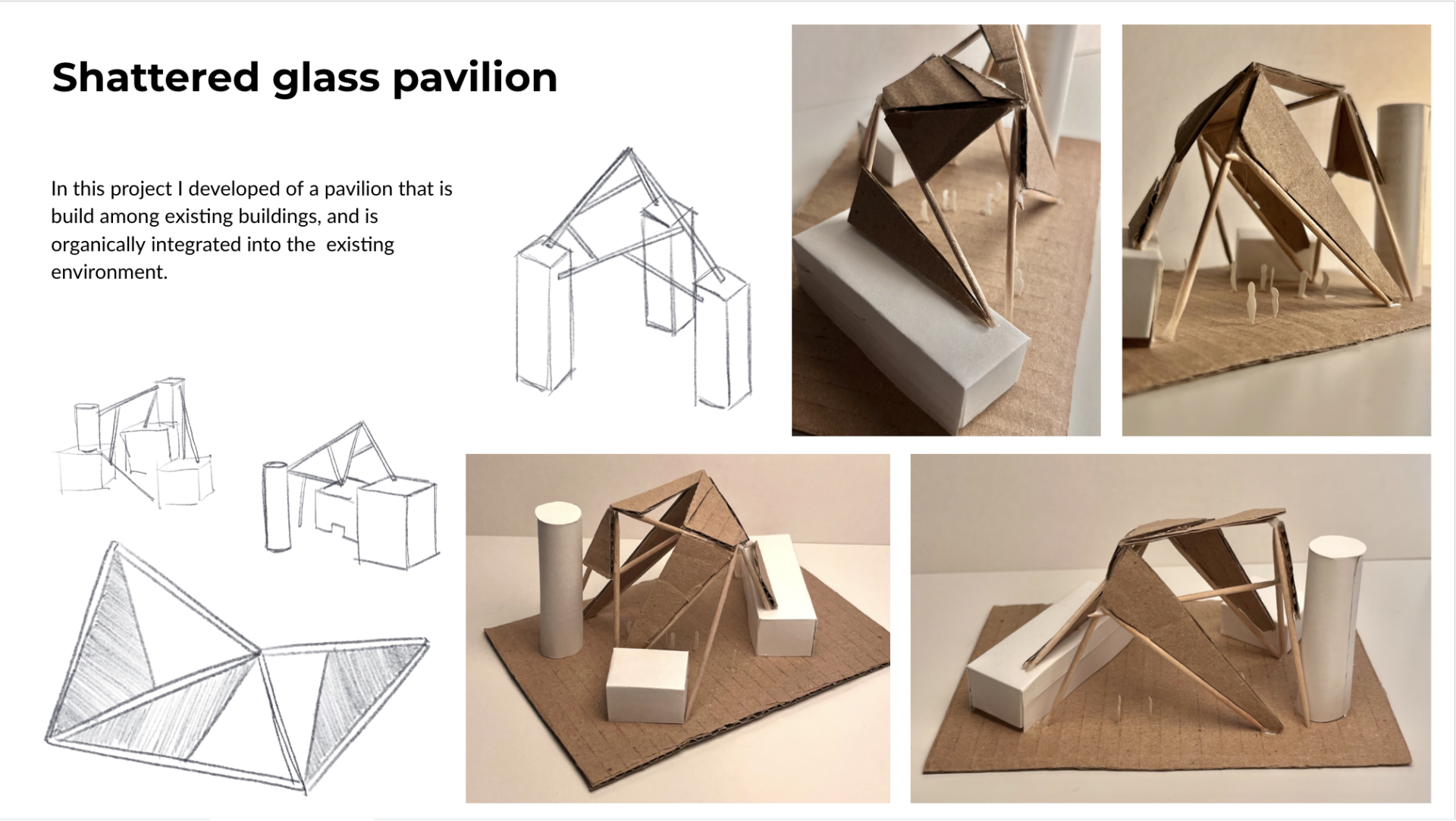
"The cardboard model was a Foundation course assignment: A scale model of a pavilion between three already existing buildings. I liked this project a lot and decided to develop it further for my portfolio."
Empty space, drag to resize
After completing the foundation course, you continued with the Architecture Portfolio Course while applying to architecture BA programs. What kinds of programs were you aiming for, and how did the portfolio process unfold in practice?
Melana:
"I was applying to Bachelor of Architecture programs with a focus on urban and exterior design across Europe. Even though some of these programs didn’t strictly require a portfolio, having one was a clear advantage for demonstrating creative and spatial thinking skills. Through the portfolio course, I also learned how to present my ideas visually and how to build or update my portfolio in the future, not just for this specific application round.
The portfolio itself took me about eight weeks to put together, not including the time I had already spent on the foundation course. During the foundation course, I created many projects, and from those I selected the ones that best related to my desired degree and reflected what I want to do in the future. I had a few works I had created entirely on my own, but most of my portfolio was based on ideas and projects from the foundation course that I then developed and improved significantly. My first step was to gather all possible projects into a slide presentation, after which I consulted on which ones to select, focus on, and develop further."
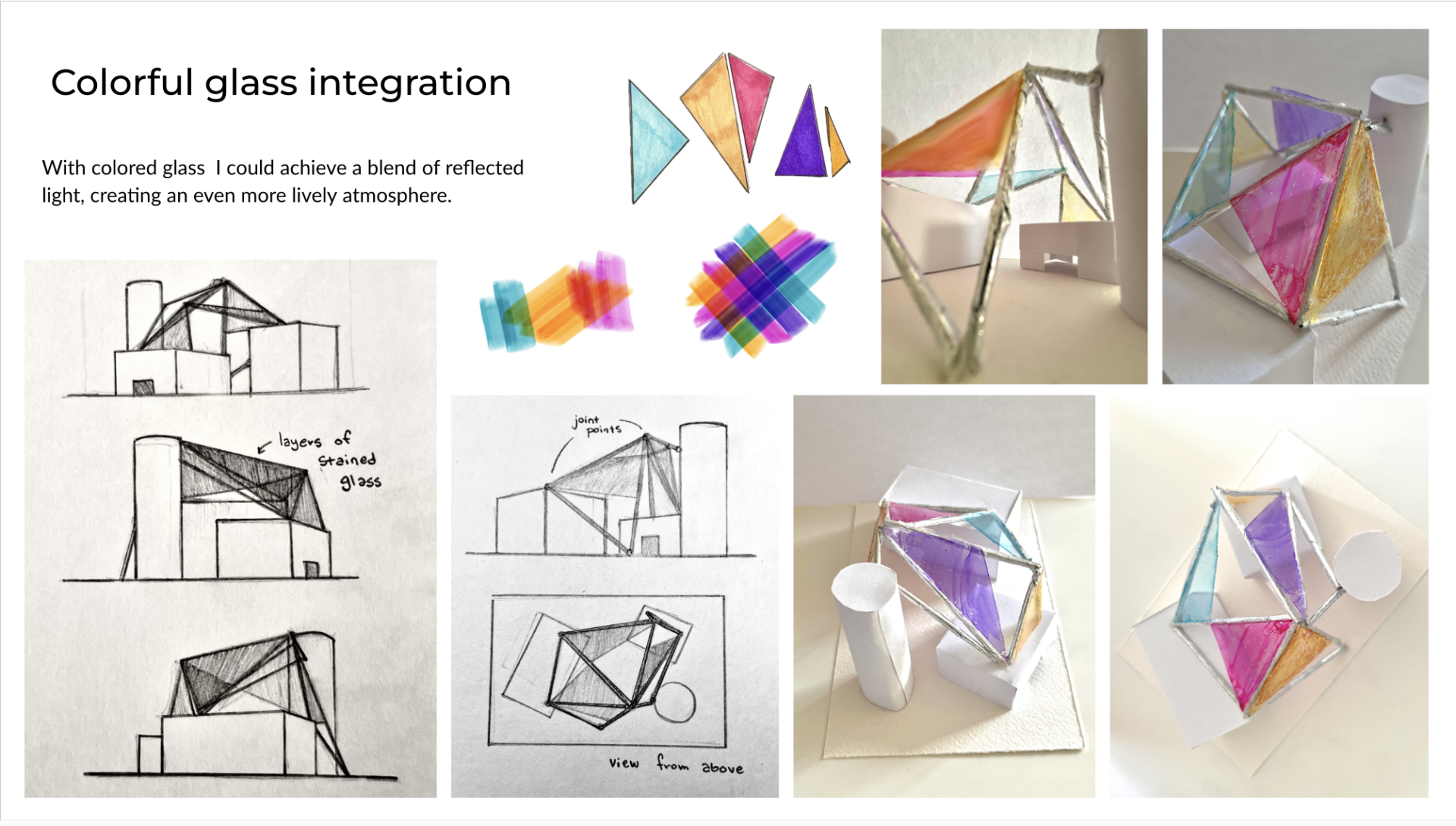
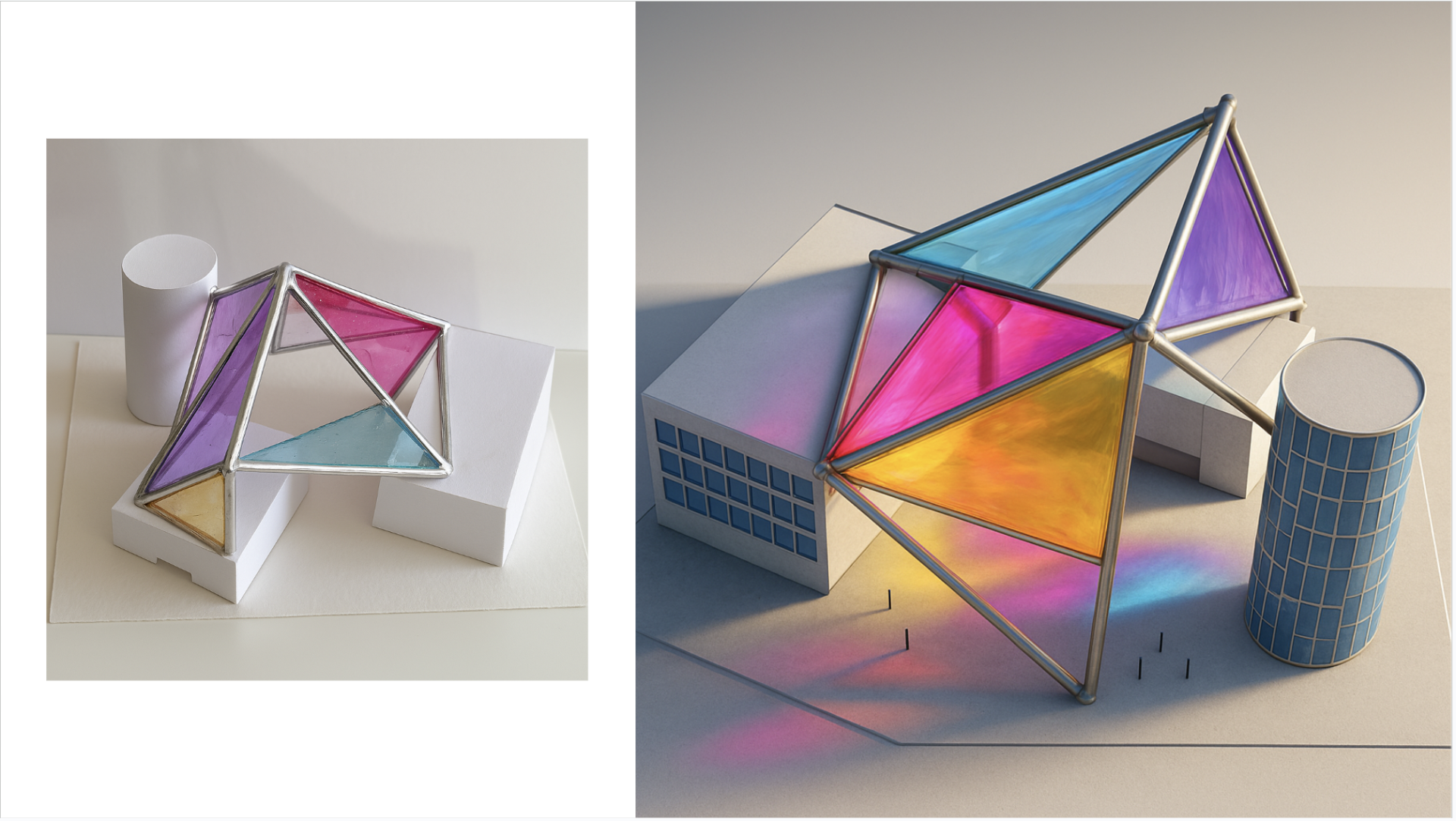
"The three images above show the final project pages from my portfolio. They illustrate how the original cardboard model evolved into a more refined structure, where I also explored atmospheric light and color. Developing the projects further through teacher feedback was especially rewarding, as each new iteration sparked additional ideas and pushed me to challenge both my skills and my perseverance."
Empty space, drag to resize
From a student’s perspective how would you describe the teacher’s role and the feedback you received? What did you appreciate, and what would you change?
Melana:
"My teacher was very supportive throughout the whole process. She gave me feedback on every project and clearly pointed out both strengths and weaknesses.
The feedback on the foundation course projects was especially detailed and well balanced. It combined constructive criticism with positive highlights. I’m really glad I took the foundation course first, because it gave me a strong base to work from. I didn’t feel lost or overwhelmed when starting the portfolio from scratch.
I also really appreciated that both courses are self-paced. That gave me full freedom to set my own deadlines and manage the workload in a way that suited my life.
If I could change something, I might have focused on fewer projects and developed them even further. But overall, the guidance I received during both courses helped me a lot throughout my portfolio journey."
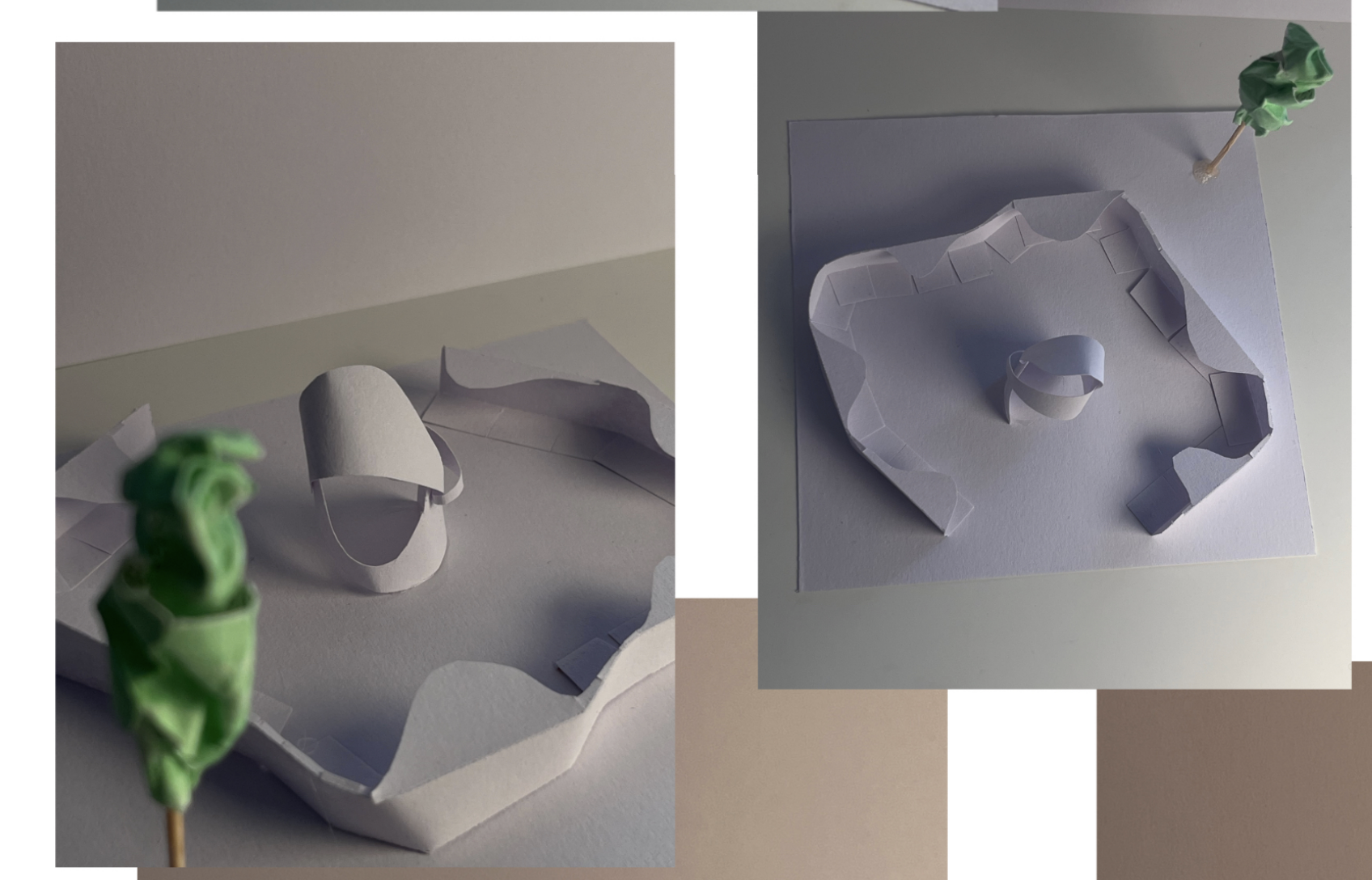
"Foundation course assignment: Sculptural seat. The course asked a lot of prototyping and models about our ideas. I think it is essential, as even a very rough paper prototype can tell you a lot about proportions and volume, things you may not think if you only sketch or draw."
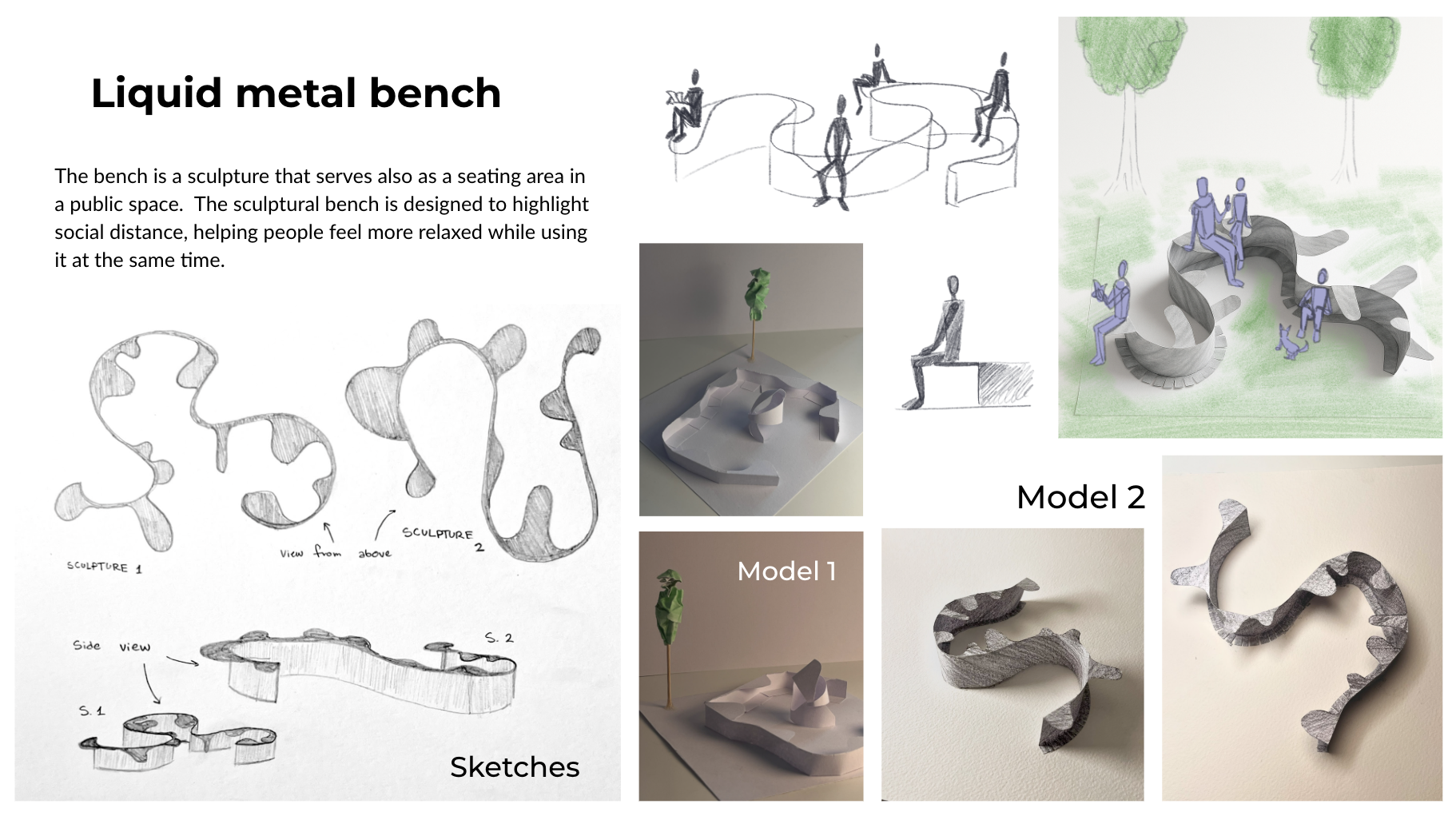
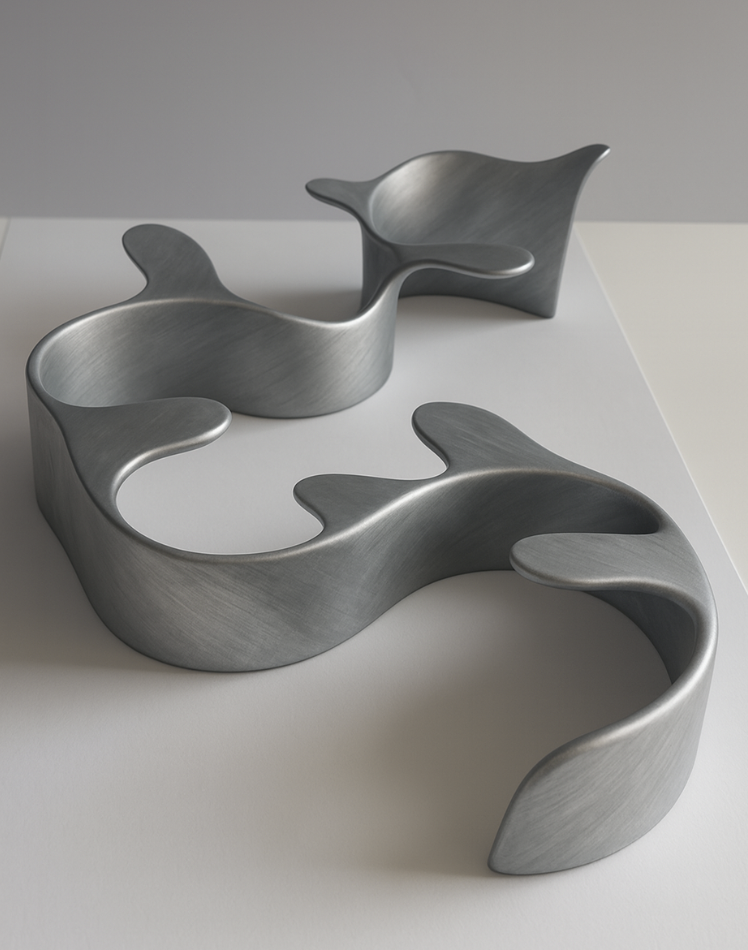
"Portfolio page of the developed seat project. In the development process I played with the curvature of the bench, thought about the proportions, and usability, did several additional prototypes and finally also created a rendered version of the final sculptural bench."
What would you say as advise to someone who’s considering these courses?
Melana:
"I would definitely say that the combination of the foundation course and the portfolio course is worth it if your goal is to create a fully finished portfolio, but you’re not yet sure whether you have enough strong projects or architectural skills.
For me, doing both courses in sequence made the whole process clearer, more structured, and much less overwhelming."
Melana's experience shows how combining an architecture foundation course with a portfolio course can help you explore the field, refine your interests, and turn early ideas into a coherent, application-ready portfolio. Join our courses now and start your journey!