Every Design School Is Looking for Something Different: Sofiia's Application Journey (Part 2)
Jun 20
/
Eeva
SDS Student Sofiia Barsuchenko from Ukraine re-applied to design programmes in Finland and the Netherlands after a gap year. In Part 2, she explains how the two application systems pressured her differently, how she built a portfolio around a craft from her own past, and the one piece of advice she would give anyone applying more than once.
Having gone through both, Sofiia is precise about why one process felt heavier than the other. The difference came down to timing and waiting.
"The KABK application was a little less pressuring than Aalto. Aalto's system is almost always based on timed assignments, followed by long waiting periods to hear the results. KABK is timed in only one part — otherwise it's based on the portfolio. Each application is difficult in its own way, and both leave you without much exact context about what's expected. That gives you freedom to experiment, but if you overthink and doubt yourself, the freedom can make it harder."
Because KABK leaned so heavily on the portfolio, the work shifted from solving timed problems to curating a body of work that could speak for itself.
Designing the Portfolio With Intention
For the portfolio, Sofiia started not from a checklist of projects but from a clear vision of how the whole thing should feel.
"From the very beginning I had an idea for the design of the portfolio that I really wanted to realise, so I was mainly driven by the motivation of making it look the way I imagined."
Some pieces came from earlier studies and from her previous Aalto preliminary work. Two came directly from the SDS course — deliberately chosen to show range.
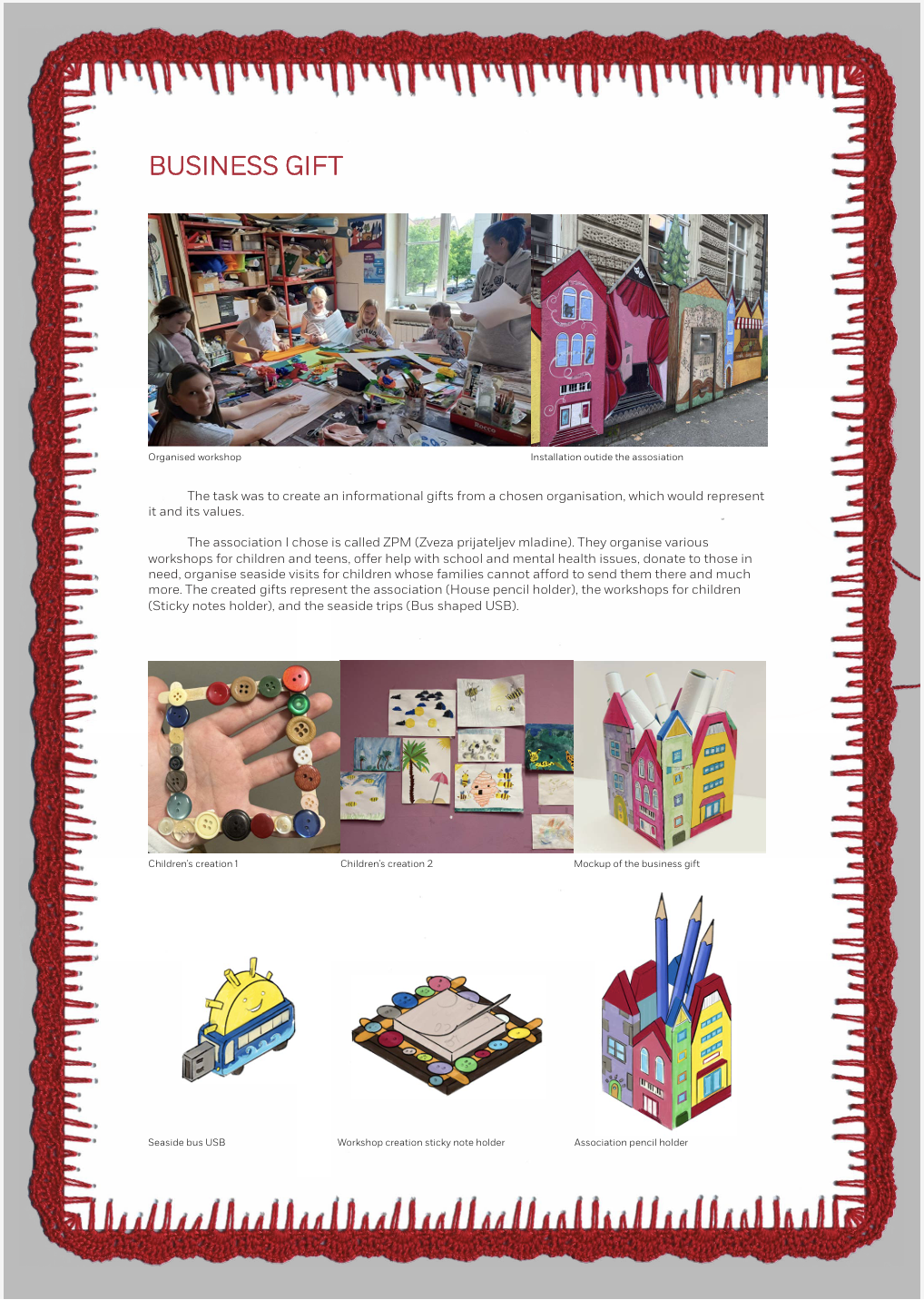
"The two course works that went straight into the portfolio were from the very beginning and almost the end of the course. One was a poster about a specific theme (mine was transportation) and the other was about ideating, planning, and producing a set of business gifts for a non-profit organisation. I wanted one shorter project and one that was more extensive and required more planning. I would have included more course projects if I hadn't had a page-count limit."
Sofiia's SDS course work: that she chose to the portfolio: A project to design business gifts to a local social organization. She cjhose an association working for children and the gifts consider the different ways association serves the community.
Empty space, drag to resize
A Visual Identity Rooted in Craft
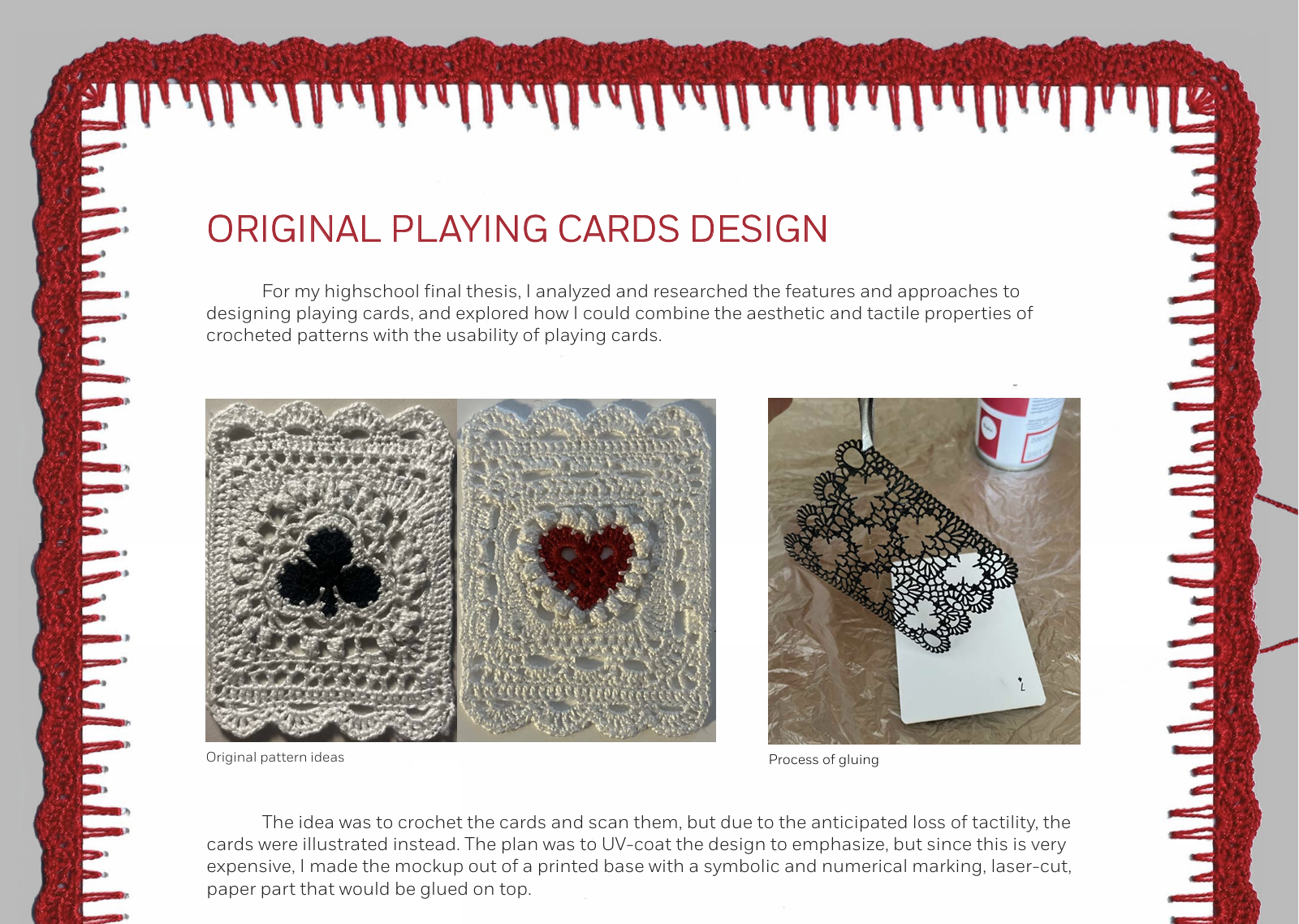
What makes Sofiia's portfolio distinctly hers is where its visual language came from: a high-school art thesis built on traditional crafts. She turned crocheted forms into a graphic identity and let it stretch and adapt across the layout.
Sofiia's High School Art Thesis played a major role in how her portfolio layout was designed. The crocheted playcards and her interest towards traditional crafts inspired her to make the crocheted visual identity she then modified across the layout to fit different projects and proportions of pages. Some floats fitted the screen while some needed scrolling to be seen completely.
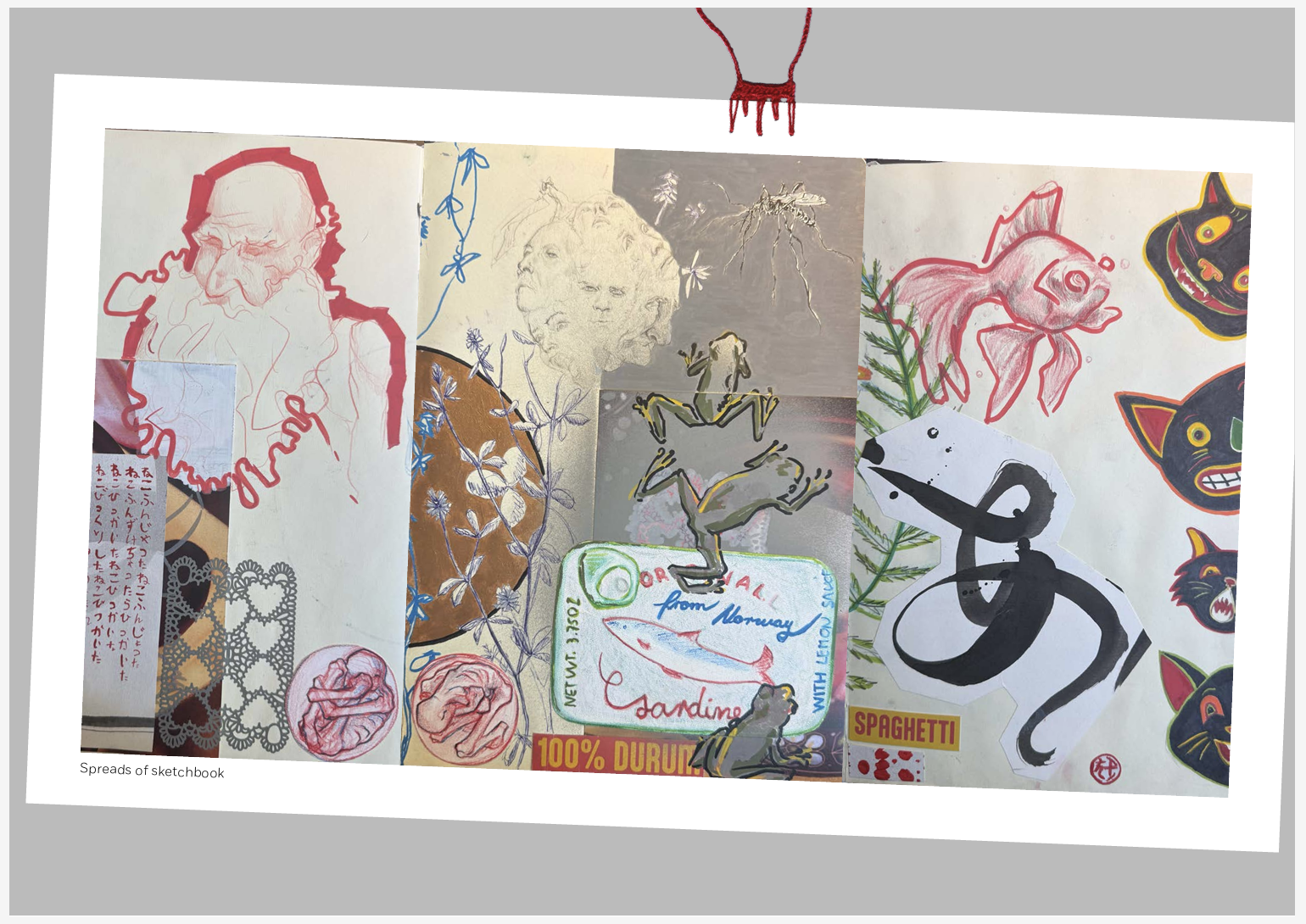
Sofiia included selected sketchbook spreads in her portfolio alongside her strongest artworks and Aalto University preliminary assignment projects from both application years. Together, these works demonstrate her range across different mediums, her persistence in pursuing a career in design, and her ability to develop ideas over time while also experimenting and engaging with early stage ideation.
Empty space, drag to resize
Learning Through Other People's Eyes
Across both the course and the applications, Sofiia keeps returning to one factor as the most useful: feedback from people who don't share her perspective.
"The most important part of developing both the portfolio and the assignments is definitely the feedback and constructive criticism others give you. People can point out aspects of your design you'd never have thought of. They question decisions you assumed were obvious, or share how they read your work, which opens new possibilities. On the course it's valuable to hear not only the teacher but the other students — many of us have very different backgrounds, so their viewpoints differ from yours."
The earlier course exercises also did quiet, practical work: they made the real assignments feel less alarming.
"Those exercises were a great practice under pressure, because you have a deadline. Because of them I was much less nervous going into the application tasks, so I could plan and work more focused."
What Each School Valued
By the end, Sofiia could see the two schools' priorities more clearly — and stopped trying to satisfy one universal standard.
"Both Aalto and KABK valued process and unique ideas. KABK seemed more interested in the context of a project, while Aalto seemed to value interdisciplinary thinking and sustainability — they seem to like it when you address sustainability in your submission. Both want to understand your thinking, and both want you to experiment."
Empty space, drag to resize
A strong portfolio does not only present final works and finished outcomes. It communicates how you think while working, what decisions you make and why, and how your process develops over time. In design, much of the important work happens before the final result is fully realised. It may be scary to show something that is not yet a finished thought, but that reveals a lot more to the evaluators than perfect and polished finishes.
Sofiia's journey ended where it needed to: an acceptance to KABK, built on a portfolio that was unmistakably her own. If you find yourself applying more than once, here is her advice:
"The most important thing in all of these applications is consistency! Do not give up, even if you don’t get the wished result the first time, or the second. Go through with the applications and do your best, even when it seems that your chances are small, if nothing else, you will surely gain experience and learn something from the process."