Getting into Aalto University's BA in Design and Media is highly competitive. In this second part of our interview, Kio explains how she approached the entrance assignments across two application years, how her process changed the second time around, and what she learned from the
SDS BA in Design preparation course.
A note on the process: Aalto does not allow outside help in producing the application assignments. SDS tutoring never tells a student what to make. The teachers discuss the student's own ideas and ask questions that help them work out for themselves how to improve. Everything Kio describes below was made and ideated by her, within those limits.
The first thing Kio noticed was how differently the two systems define learning itself.
"In Japan, we study a lot to memorise knowledge across several subjects, and we try to build broad basic knowledge, and almost all of it can be done in a study room. At Aalto, the studying is about broadening your horizons, understanding your own interests, going out to places to get ideas, and walking outside while carefully observing design."
Kio describes the Japanese tasks as something you prepare and perform, where you aim to execute as expected. The Aalto assignments felt different:
"In the Aalto application, I could find new insight and a new style during the actual assignment. You can learn a lot either way, but I can clearly say that in the Aalto application process, you grow up as a designer."
For Kio, the open-endedness of the preliminary assignments was both the freedom and the difficulty. The first task was always to figure out what was really being asked, and then to choose a subject she could speak about honestly.
"There's so much room to think and explore. I first need to understand what they're asking and what I should choose as my subject. I try to choose something I know well or have experienced myself, so I can imagine it in my own way. Then I talk to my family and friends, and if I can talk about it passionately, I know it was the right choice."
The hardest part, in both application years, was the narrowing.
"In both attempts, the most challenging thing was narrowing down the concept: what is the point I want to change, who is the target group, and what change do I actually want to make. I could only really find what I wanted to say through drawing, sketching, and reviewing with my family and SDS tutor."
The biggest change the second time was about sequence: making before overthinking.
"What I changed the second time was trying to move my hands a lot before thinking too much. It made my process more interesting and quicker."
Her favourite assignment came from her first application in 2025: a 3D model built around the theme of radical creativity, which she called the "fluid puzzle."
"When I first reviewed my first 3D model, it wasn't a very new idea, and it was suggested to me I could play with the assignment more. At first I was a little confused, because I was being too serious about it. But gradually I understood that the point was to play in order to create. I became much more active about experimenting, and in the end I made a 3D puzzle that can change its shape a lot and can also be played with by adults, which is exactly what I wanted."
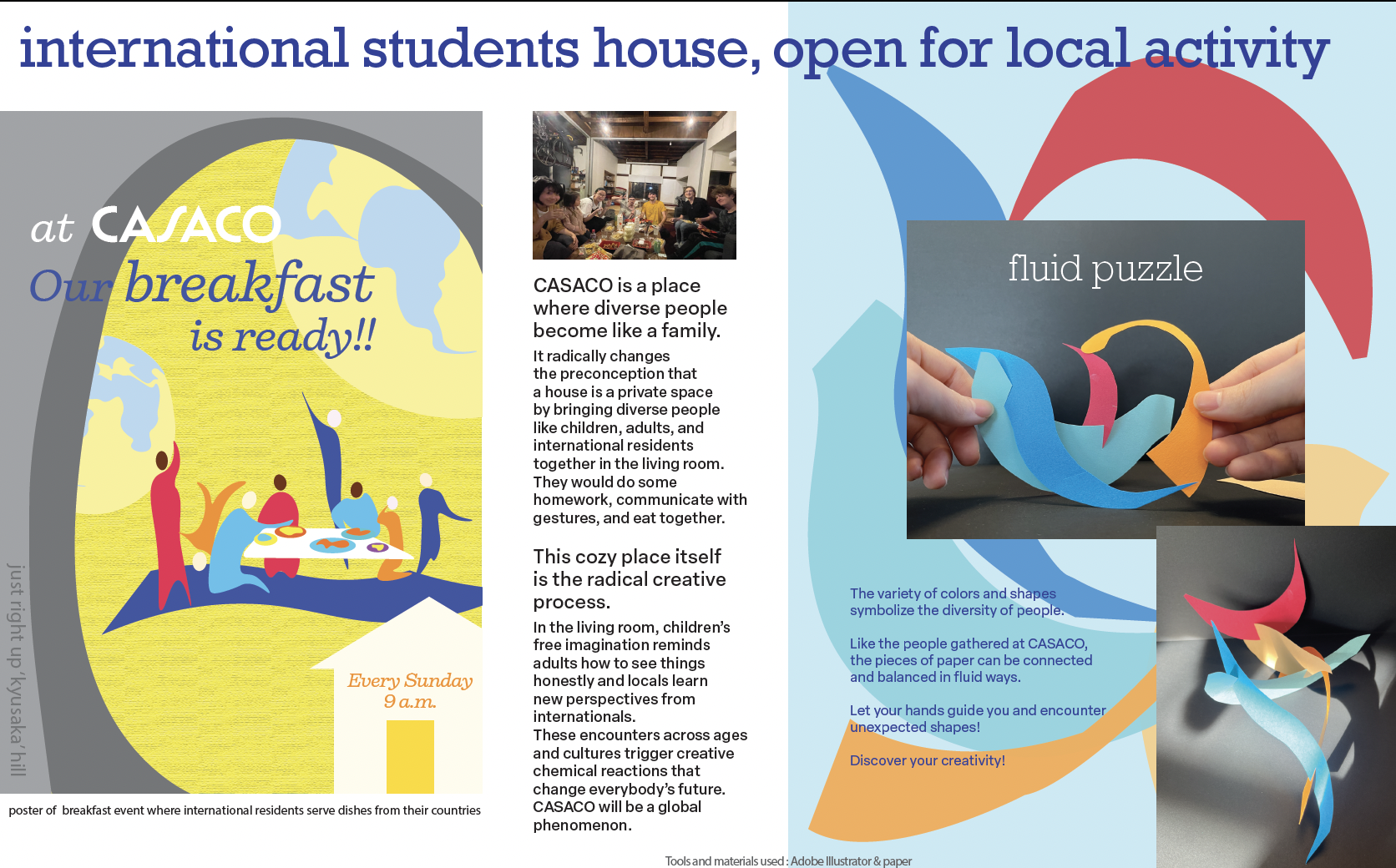
Kio's 2025 preliminary assignment. The 3D puzzle which can be arranged in multiple ways represents concept's "anyone is welcome" perspective.
Empty space, drag to resize
The intake assignments felt mentally different from the preliminary stage, and the two application years felt different from each other too.
"The first time, I felt stressed for a short period, and it was difficult to balance three different tasks. The second time, I decided to create the final version much faster, to go out more to find inspiration, and not to worry so much about the two-week period. Having three separate assignments actually gave me room to think about each one gradually, instead of everything stacking up."
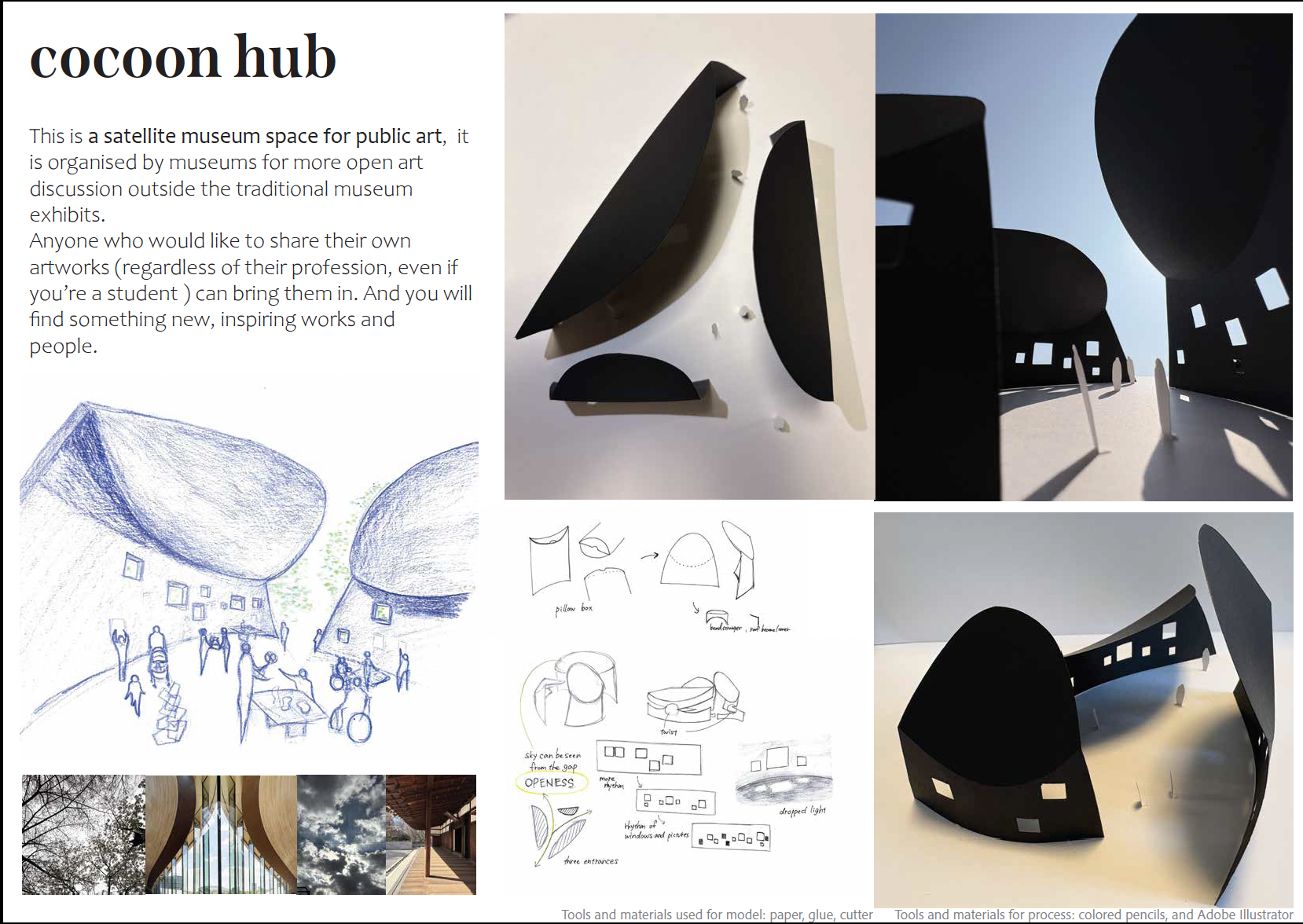
Kio's intake assignment pavillion. A meeting hub for people who consider museums too "stuffed" and restricting. Anyone may present their artwork there, and view creative works that may differ from the official "approval".
Empty space, drag to resize
Her favourite task was the visual timeline journey from her second application year, the first task she remembers genuinely enjoying from start to finish.
"It was the first time I enjoyed the whole process without feeling stressed. I didn't narrow down too early what I wanted to draw, and I just walked slower than usual. Then I realised I have a real interest in the shapes and patterns of nature and other things. I sketched while walking, and I could imagine using those shapes directly in graphic design. The work of a designer I admire influenced this too, so it became a mix of my experience, my studying, and my interest. I didn't have much confidence in graphic design before that, but here I felt I could find a part of my own style."
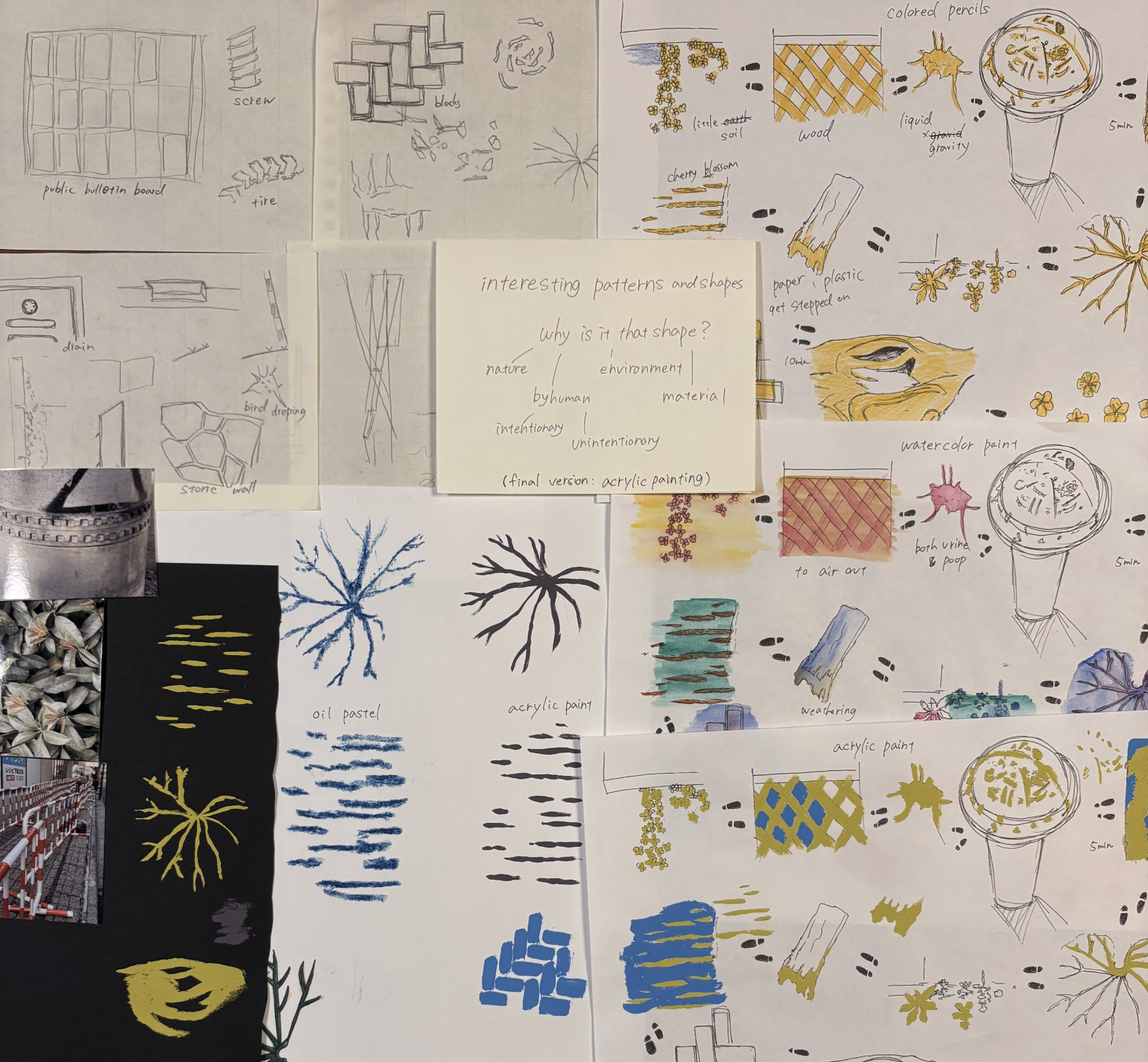
Kio's sketches and process images she submitted for the timeline
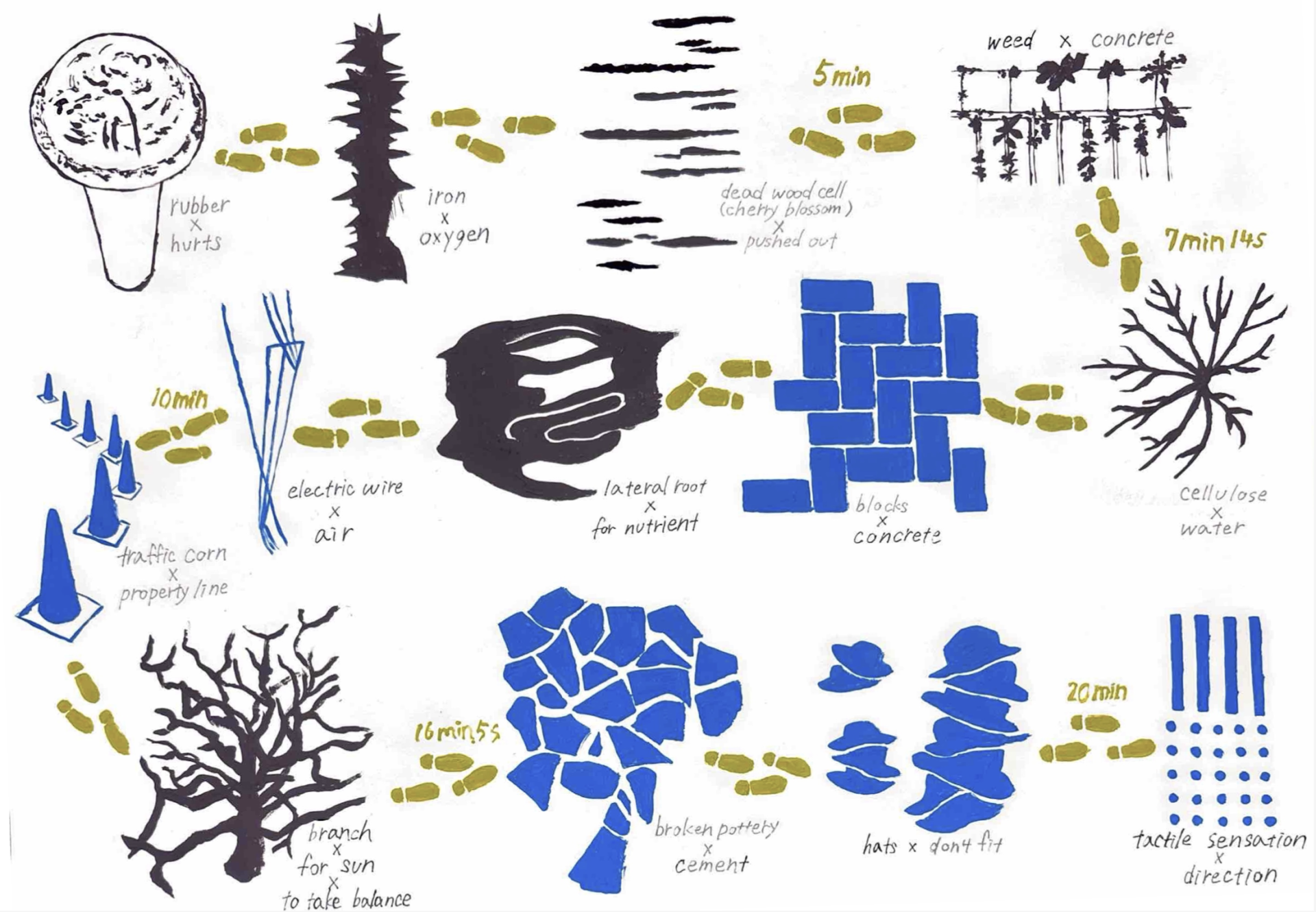
Kio's final work for the timeline assignment. The descriptions and the images create an interesting perspective to both the taken journey, how she observes her surroundings and how she changes those observations into visual notes.
Empty space, drag to resize
By the interview stage, Kio understood that the conversation was less about correct answers and more about character.
"I think the interview was looking for how passionate you are, what kind of person you are naturally, and how you improve your design. I felt I had prepared the answers quite well, thanks to SDS's course. The only thing I could have done better was to think about the questions more flexibly, rather than trying to answer strictly how I planned"
When asked which feedback in the SDS course shaped her most, Kio returned to an early, surprising moment from her first year on the course, a self-portrait assignment.
"My groupmates' drawings were great and well done. I, on the other hand, used a lot of text. But The teacher said they had never seen this kind of self-portrait, and that it was interesting just because of that. I was surprised that being a bit different from other strong applicants was not a mistake."
The portrait Kio mentions is set as the "portrait image" in her blogs. The group sessions stretched her thinking in a similar way.
"My friends' ideas were very different from mine every time, and it made me want to create designs that would make them curious. Tutoring is really important in design, because there is no single correct answer."
She points to the face-to-face conversations with SDS teachers as the single biggest factor in her success.
"To nurture my work, I needed feedback from professionals like the SDS teachers. It's hard to name just one thing, but I'm sure the biggest part of the course was being able to talk with Eeva [one of SDS Teachers]. I felt more confident and motivated during and after talking with her. Her feedback wasn't only about pointing out things in your design. It's more like it helps you grow as a designer."
Looking back, the point of greatest clarity was not her first, more anxious attempt, but her second.
"When I was working on the intake assignment the second time, I felt the most clarity. I think it's because I could genuinely enjoy the process and find the best style for my design, instead of constantly remembering that these were entrance assignments. The first time, I pressured myself too much and ran out of time. The second time, I set the goal of simply finishing the assignment, and interestingly, that worked. I focused on making, not overthinking, and the basics of the intake assignment were done in one week."
Empty space, drag to resize
Kio's journey is a reminder that a strong application is rarely about producing flawless work under pressure. Her second attempt succeeded not because she became a different person, but because she gave herself permission to slow down, play, trust a perspective that looked like her, and let the design flow from there.
This autumn, Kio will start a new phase in her life, moving to Finland to study at Aalto University. Congratulations, Kio!
Kio's journey is a reminder that a strong application is rarely about producing flawless work under pressure. Her second attempt succeeded not because she became a different person, but because she gave herself permission to slow down, play, trust a perspective that looked different from everyone else's, and let the design follow from there.
In the autumn, Kio will begin a new chapter, moving to Finland to study at Aalto University. Congratulations, Kio!
Stay tuned for the second part of the interview, where Kio walks us through the actual Aalto assignments, from a shape-shifting 3D puzzle to a walking timeline, and reveals what finally made her application click.
In Part 2, she explains how she built the portfolio that got her into KABK, and how a craft from her own past became the backbone of its design.